
America 250: Explore Niobrara
Explore Niobrara
Frank Lusk’s Life in Wyoming
Adah Pflughoeft
Lusk will be celebrating the nation’s 250th anniversary on August 8, 2026. Information will be made available about events as the time draws nearer. Meantime, reserve the date.
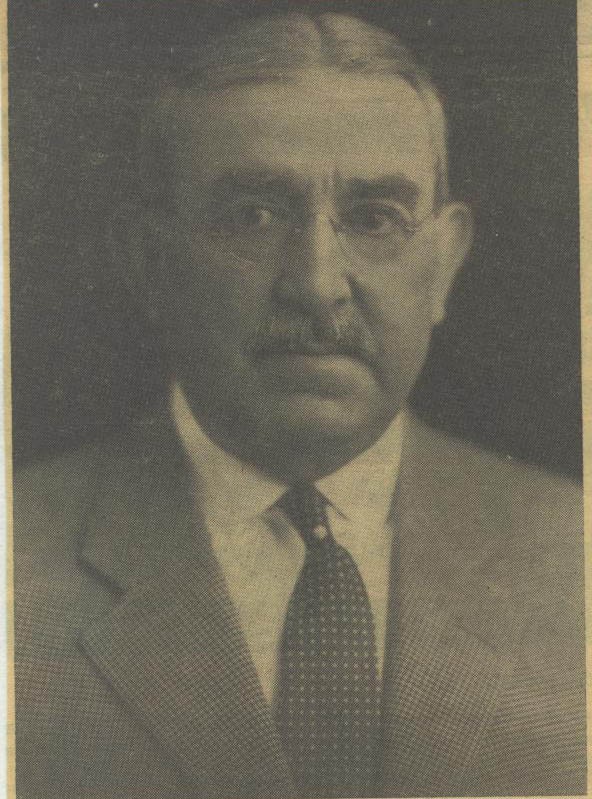
In the 1870s, Frank Stillman Lusk, a native of Buffalo, New York, headed west. The promise of the plentiful land, precious metals, and perfect scenery of the American West had captured the nation’s imagination since the beginning of the nineteenth century, but it was not until America’s industrial age that the West truly held the potential for power and profit. As railroads advanced farther west after the American Civil War, transporting beef from western pastures to eastern iceboxes became even more feasible, especially with the introduction of inventions like the refrigerated railcar. This linking of the East and the West opened the door for large-scale cattle ranching to become a lucrative business. Frank Lusk, like many other men of his day, recognized this and strove to take advantage of the opportunities on the open range.
Lusk partnered with several friends to create the Western Livestock Company, situated near Greeley, Colorado, in 1876. Unlike many of the aspiring ranch owners drawn West in the late nineteenth century, Frank Lusk thoroughly understood the intricacies of the cattle ranching business. In Lusk’s eyes one thing was becoming increasingly clear: he needed more land than was available in Colorado. “In 1879, we thought we were being crowded and determined to move,” Lusk wrote. Recalling a visit to Cheyenne in 1877, Lusk remembered “being impressed with the class of people then in the Territory of Wyoming,” and settled upon Wyoming as the site for his new venture. In 1880, Lusk and his partners reestablished the Western Livestock Company at Node, about fifteen miles east of what is now the town of Lusk.
Always level-headed, Lusk knew that success wouldn’t come easily, and he took the hardships of life in the untamed West in stride. “In January 1887 I rode horseback from the ranch… and overlooked the lay of the land,” Lusk recollected. “I undertook to ride back to Fort Fetterman…but was so delayed that it was nearly dark by the time I got through at what is now Douglas. I picketed my horse, sat down in a little gulch under the only cottonwood tree around there, built me a little campfire and camped there all night…There was no ranches at all, or places to stop between Fetterman and Lusk at that time.” Frank Lusk was resilient – not only for camping under the open skies in the winter of 1887, but for surviving the winters of the 1880s at all. In 1886 and 1887 massive blizzards devastated ranches across the West in a time which ranchers later referred to as the “Big Die-Up.” Like other Wyoming ranchers, Lusk lost a significant portion of his cattle in these winters. The “Big Die-Up” prompted many disheartened ranchers, including Lusk’s business partners, to round up the scrawny cattle which had pulled through these disastrous winters and to seek greener – and warmer – pastures.
Yet, Lusk was not willing to leave Wyoming. He had built an enviable little kingdom for himself on the prairies of eastern Wyoming. In addition to his original ranch at Node, Lusk established a horse ranch where the town of Lusk is now situated. In 1886, he built a house for his mother, Cornelia Stillman Lusk – a beautiful Victorian home which contrasted sharply with the rugged, empty countryside. (The Lusk House, currently the Pier Funeral Home, now stands just south of the Stagecoach Museum.) Lusk saw Wyoming’s open prairies and the cattle which grazed on them as far more than potential profits from eastern meat-packing plants – ranching was Lusk’s lifestyle, and Lusk, Wyoming was his home. Even still, he foresaw that like other industries, cattle ranching would go through booms and busts. To stay in Wyoming, Frank Lusk would need another business plan.
Lusk recognized that the railroad was instrumental in the development of the American West, and he became a stockholder in the Chicago and Northwestern Railroad in the late 1880s. As the railroad extended toward the coal mines of the Black Hills, Frank Lusk became a director of the Wyoming Central Railway and helped to organized the railroad’s expansion into central Wyoming. Lusk also worked to establish the first post office in the area.
In 1894, Frank Lusk married Louise Findley of California. Only a few years later, around the turn of the century, Lusk turned his attention from ranching and railroads to purchasing land to build a town. He bought several parcels of land for a total of about $12,000. Lusk sold the majority of his lots to the Pioneer Townsite Company in 1910. Soon after, his railroad interests took him to Montana, where he made his home until his death in 1930. “Wyoming…was really my home state,” Lusk reminisced in 1923. For Frank Lusk, the resilient rancher and railroad man who traded the cities of the East Coast for the open range of the rural West, home would always be right here in Lusk, Wyoming.
*************
Explore Niobrara
Cheyenne-to-Deadwood Stagecoach
Leslie Stewart
Lusk will be celebrating the nation’s 250th anniversary on August 8, 2026. Information will be made available about events as the time draws nearer. Meantime, reserve the date.
This article is scheduled to be published in a forthcoming book, Wyoming’s History in 26 Objects.
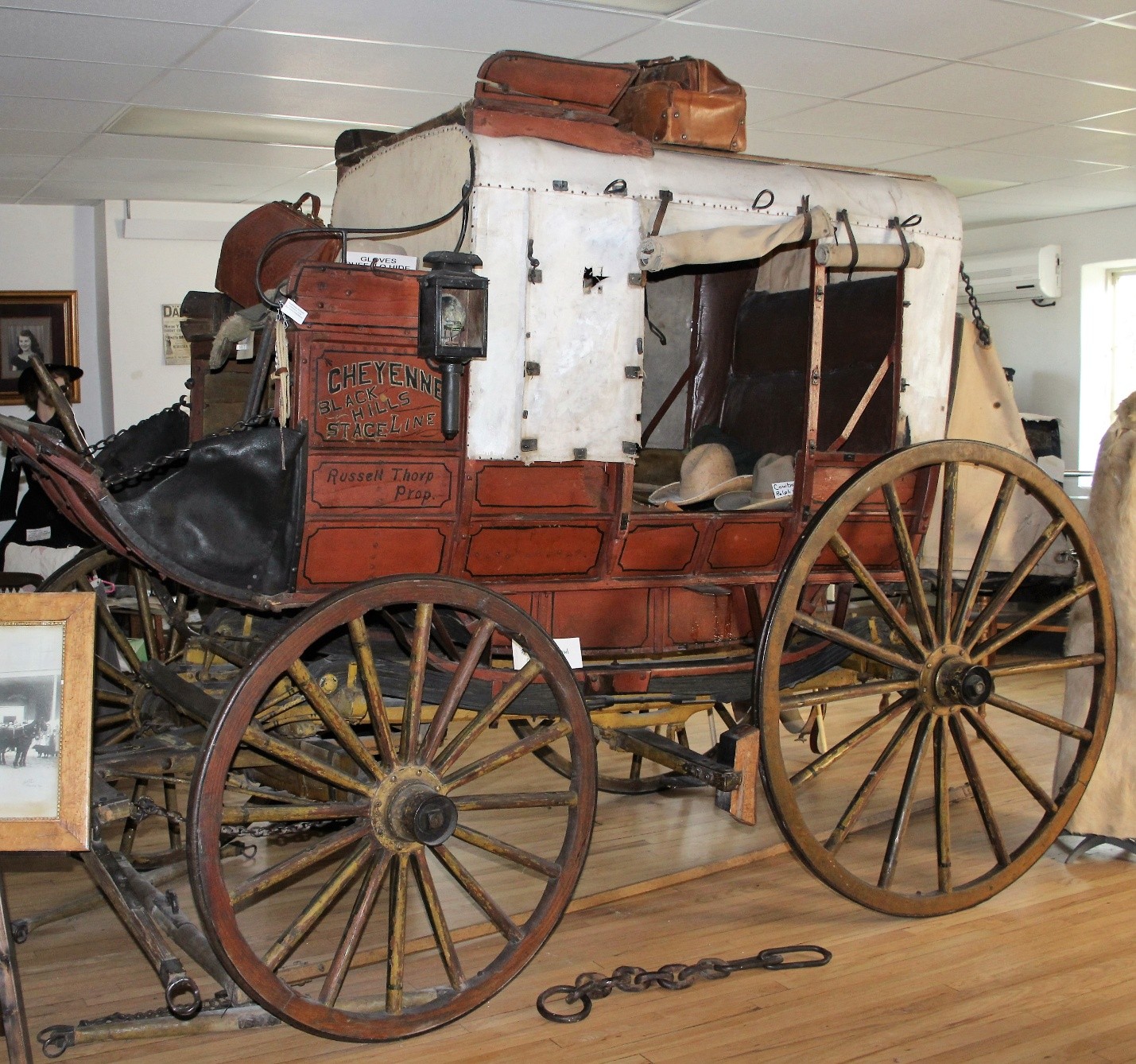
When gold was discovered in the Black Hills in 1874, it became clear that transportation was needed between the railroad in Cheyenne and the gold fields. The Cheyenne and Black Hills Stage and Express Line, commonly called the Cheyenne-to-Deadwood Stage, was formed to meet that need. For 10 years, from 1877 to 1887, daily stagecoaches left both Cheyenne and Deadwood carrying passengers, mail, express, money, and gold bullion.
The stage company started with 30 Concord coaches, which were manufactured by Abbott and Downey in Concord, New Hampshire. These 2500-pound coaches were considered the finest made. Craftsmen fashioned wheels and bodies out of resilient wood. The cushioned leather seats were hand sewn. The colorful artwork and pinstriping decorating the outside were done by hand.
Instead of sitting on springs, the coach rested on leather thoroughbraces to produce a more comfortable, swinging motion. The coach had two boots. The front storage area held mail, express, and valuable cargo, and the rear boot was used for baggage. Some coaches were reinforced with metal to protect passengers and valuables during attacks.
The coach could carry up to nine passengers inside with three people on each of the front and rear seats and sometimes three perched on a middle seat without a backrest. Three could ride on top facing backwards, and three more could ride in the seat behind the driver.
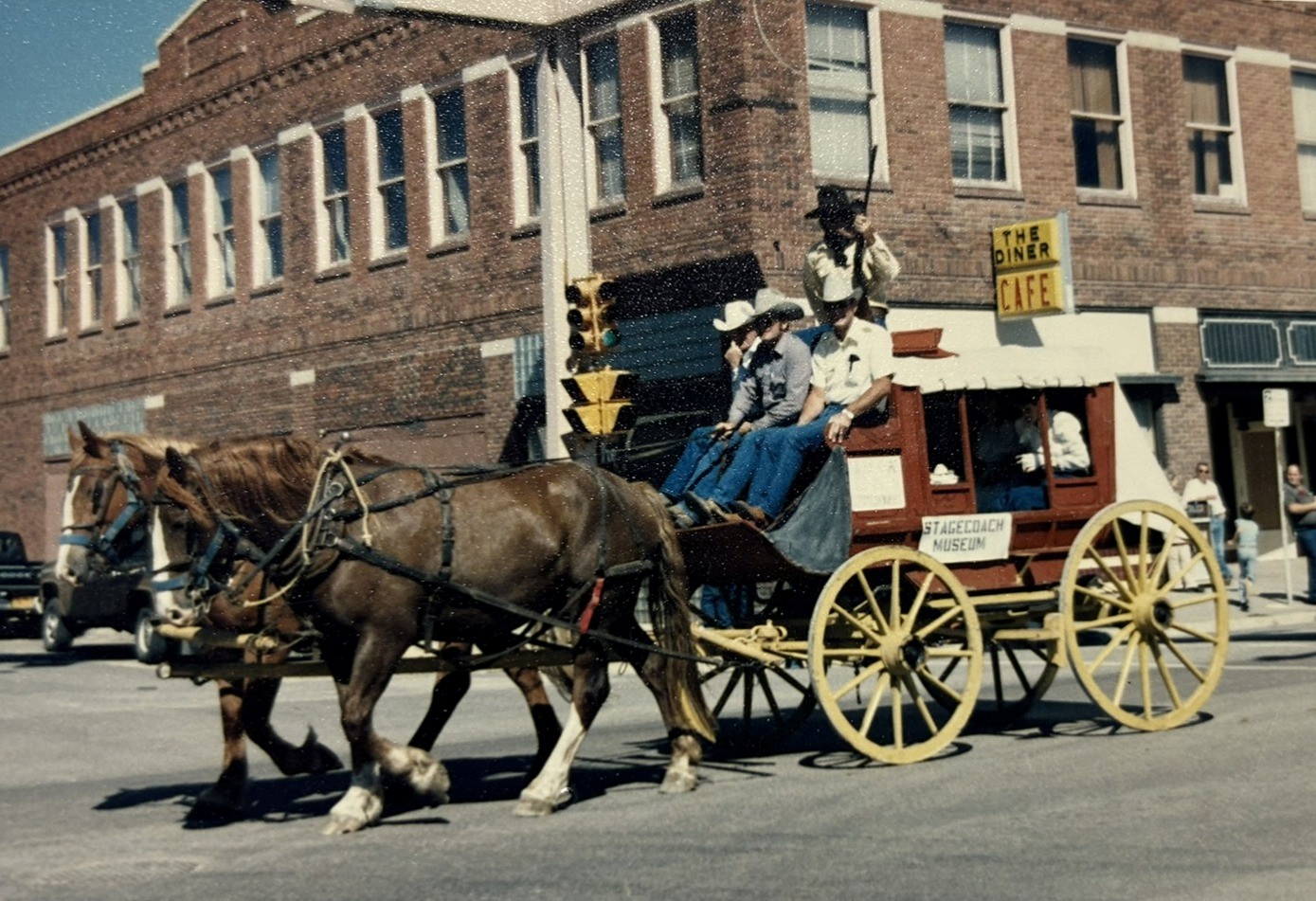
The last stagecoach to make the journey between Cheyenne and Deadwood now resides at the Stagecoach Museum in Lusk, Wyoming. It started life in New Hampshire in the early 1860s. It was shipped around Cape Horn to San Francisco, traveled overland to the silver fields of Nevada, and when those faded, came to Cheyenne to make the grueling trips back and forth to Deadwood.
The 320-mile trip took 50 to 55 hours of traveling day and night. Stops at swing stations every 14 to 18 miles lasted only a few minutes to change the four or six horses. Stops at home stations every 50 to 60 miles were longer for meals and change of drivers.
This last coach, which is displayed at the Stagecoach Museum, left Cheyenne in February1887, giving way to the new railroad lines. In 1927, the last owner of the stageline, Russell Thorp, presented this coach to the Lusk Lion’s Club with this description of its importance: “I present this stagecoach to you as a tribute to the memory of those men … who blazed the trail, fought the Indians, subdued the outlaws and road agents, and made it possible to establish and maintain communication with the outer world and have made it possible for … all of us to establish our homes that we may live in this wonderful country in peace and happiness forever.”
***************
Explore Niobrara
Henry Hotel and Spencer Hospital
Adah Pflughoeft
Lusk will be celebrating the nation’s 250th anniversary on August 8, 2026. Information will be made available about events as the time draws nearer. Meantime, reserve the date.
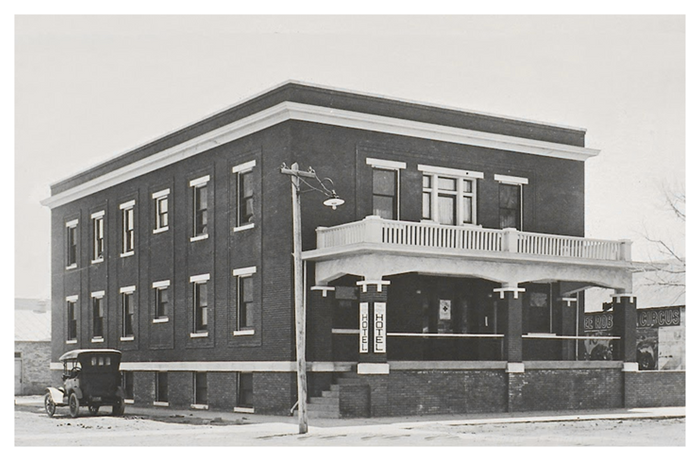
By 1917, little Lusk, Wyoming, had grown into a bustling rail-side town frequented by travelers. Of the several hotels established in Lusk around the turn of the century, the Henry Hotel stood out with its steam-heated rooms, electric lights, and hot and cold running water. A classy, modern, and welcoming establishment, the Henry Hotel mirrored its owner, Mrs. Lena Larsen Henry. Despite her natural professionalism and her charming personality, Lena Henry hadn’t ever anticipated becoming a business owner on the great plains of Wyoming. Born in Flekkefjord, Norway in 1857, Lena and her best friend Louise immigrated to America in 1882, settling near Fargo, North Dakota. From there they traveled to Cheyenne and earned their livings as housekeepers. In 1887, Lena and Louise became interested in the mining boom near the town of Silver Cliff, Wyoming and headed north. They were among the first half dozen women to settle in the area. Lena quickly became a prominent figure in the community, operating a successful restaurant and building friendships with the locals. Lena was one of the last people to talk to Constable Gunn only minutes before he was killed in the shootout at the Walker’s and Water’s Saloon.
In 1891, Lena left the restaurant business in the hands of her friend Louise and married William Henry, a rancher who lived between Douglas and Lusk. Lena and William operated a prosperous ranch for twenty years, and in 1911, they returned to Lusk, purchasing the Northwestern Hotel located near the railway station. As Lena Henry’s talents as a cook became famous, the Lusk Herald noted that the hotel was the “only hotel between Chadron and Casper where real genuine comforts and a good meal could be had.” (TLH, June 28, 1917) Apparently enjoying this life as a hotel owner, manager, and chef, Lena purchased land to build another hotel, the Henry, in 1917. When it was completed in 1918, the Henry Hotel boasted 24 rooms, each described as “substantial and elegant.” (TLH, Jan 24, 1918) The impressive two-story building was constructed entirely by local men, as the shortage of men during World War One made it difficult to obtain outside contractors. The Henry Hotel operated successfully under the management of Lena Henry and several others, including P. P. Brown, C. A. Schroeder, and Clara Schindoll until 1941, when the property was purchased Dr. Walter E. Reckling, a Colorado doctor who cherished dreams of establishing a real, modern hospital in rural Wyoming.
The Henry Hotel was a perfect fit for Dr. Reckling’s plan. Having practiced medicine in Lusk for over a decade since his graduation from the Colorado University School of Medicine in 1926, Dr. Reckling recognized the pressing need for medical care in the most isolated areas of the West, and he was determined to provide it. During its early years, Dr. Reckling’s hospital made do on a shoestring budget. In the absence of a regular sterilizer, Reckling’s nurses used a pressure cooker donated by a civic-minded community member. When there were no bells for the patients to use to summon a nurse, Dr. Reckling devised a solution – cow bells. “Each had its individual tone which the nurses came to recognize,” and the system worked quite well. (SMC) The Spencer Hospital originally had seven beds, but an incident occurred during the hospital’s early days which caused Dr. Reckling to reconsider the maximum occupancy of his establishment. When the ice cream at a festival went sour, “the stricken came in droves.” (SMC) And the sound of the bedside cowbells was terrific. “Never heard such a clamor of cowbells in your life,” Dr. Reckling remembered. “It sounded like a whole herd was running through the hospital.” (SMC)
Despite its unpretentious and potentially unorthodox methods, the Spencer Hospital was popular and its owner and head doctor, Dr. Reckling was nothing short of a local celebrity. His generous nature manifested itself in his work, as he frequently treated patients free of charge. Furthermore, he was not above turning veterinarian and treating the occasional cow or horse if the need arose. During World War Two, Dr. Reckling organized Red Cross Drives and served as first-aid chairman. In 1953, Lusk hosted “Doc Reckling Day” to honor the warm-hearted physician who had bettered the lives of so many citizens. The last privately-owned hospital in the state, the Spencer hospital was renamed the Niobrara County Hospital in 1950 and managed in turn by the county commissioners and the Lutheran Hospital and Homes Society. In 1964, a new and spacious hospital was built to meet the needs of the community and the Spencer ceased operations. The building which Lena Henry constructed in 1917 had lived several lives and had remained throughout a cornerstone of the community.
***************
Explore Niobrara
Did you know that Van Tassell once had a Burlesque Bar?
Leslie Stewart
Tiny Van Tassell once boasted a nightclub that some claimed was the best such entertainment site west of Omaha. The Buckaroo Bar, also known as the Buckaroo Club and the Buckaroo Nite Club, was established in 1947. It offered fine food in the cafe~ and alcohol at what some said was the longest bar in Wyoming. By the 1960's, it also featured exotic dancers with live bands on Friday and Saturday nights and occasional stag nights. One advertised dancer was Pixie Regan, "The Cutest Little Nudist in the Land."
Are you curious about what became of the Buckaroo Bar? For those details and even more information about Van Tassell, join us for "A Day in the Life of Van Tassell" on June 14. This part of Niobrara County's celebration of the nation's 250th anniversary. Since it is Flag Day, we will have a flag ceremony in Van Tassell at 1:30 and presentations about the history of the area starting at 2:00. For more information, go to exploreniobrara.com of Explore Niobrara Facebook page.
*********
Explore Niobrara
Lusk Reaches 140 Years Old
Leslie Stewart
On June 20, 1886, 140 years ago, the first lots were sold in the new townsite of Lusk, Wyoming Territory. Forty lots were sold at public auction for $165 to $475.
The Fremont, Elkhorn, and Missouri railroad had completed its tracks through the area the previous week on June 13. Frank Lusk, who was a major businessman, landowner, and rancher in the area, donated land for a new railroad depot, so the railroad named the new townsite after him.
However, there was already a town in the vicinity – Silver Cliff. It was a booming mining town consisting of tents, one wooden building, and about 200 residents. That town was just west of the newly established Lusk. Ellis Johnson owned the land where Silver Cliff was located. He had hoped to locate the new depot in Silver Cliff, but the railroad accepted Frank Lusk’s bid instead. Within days, the tents from Silver Cliff moved to Lusk, and wooden buildings were built. Within three months, the population grew to 300.
This week is also an anniversary of when Lusk was incorporated – June 17, 1898. Since then, some milestones include Lusk becoming the county seat of the newly formed Niobrara County in 1912 and its population exploding to 10,000 in 1920 because of the Lance Creek oil boom.
We will be celebrating Lusk’s 140th birthday on August 8 during “A Day in the Life of Lusk”. This is one of Explore Niobrara's events to commemorate America’s 250th anniversary. Partial funding for this event was provided by a grant from America 250 WY. For more information about “A Day in the Life of Lusk,” see Explore Niobrara’s Facebook page or go to exploreniobrara.com.
****************
Explore Niobrara
A Prairie Sentinel: The Century-Long Resilience of Van Tassell
By Beki Speas, President, Wyoming Historical Society
Along the stretch of U.S. Highway 20 where the Wyoming plains begin their final roll toward the Nebraska border, there exists a community that defies the modern definition of a "ghost town." While many frontier settlements of the late 19th century have vanished into the sagebrush, Van Tassell remains an incorporated entity, holding the title of the least populous town in the nation’s least populous state.
To the casual traveler, Van Tassell may appear as a quiet collection of structures. To the historian, however, it is a living archive of the three pillars that built the American West: cattle, the railroad, and the relentless grit of the homesteader.
The Architect of the Plains: Rensselaer S. Van Tassell
The story of the town is inextricably linked to the man who gave it his name, Rensselaer S. Van Tassell. Born in 1845, Van Tassell was a figure who seemed to have stepped out of a tall tale, yet his contributions were documented in the ledger books of Wyoming’s formative years. Before he was a cattleman, he was a freighter and a Pony Express rider, navigating the treacherous terrain of a territory that had not yet achieved statehood.
Van Tassell’s influence was magnified by his marriage to Louise Swan, daughter of Alexander Swan. As a principal in the Swan Land and Cattle Company—one of the largest and most powerful ranching outfits in the world—Swan provided the framework for the "Cattle King" era. Van Tassell established his own vast holdings in the region, utilizing the "V-V" brand. His ranching operations required a reliable shipping point, a need that would eventually be met by the iron rails of the industrial age.
1886: The Arrival of the Iron Horse
The trajectory of eastern Wyoming changed forever in 1886. The Fremont, Elkhorn & Missouri Valley Railroad (FE&MV), a subsidiary of the Chicago & North Western, was pushing westward through the panhandle of Nebraska into what was then Converse County.
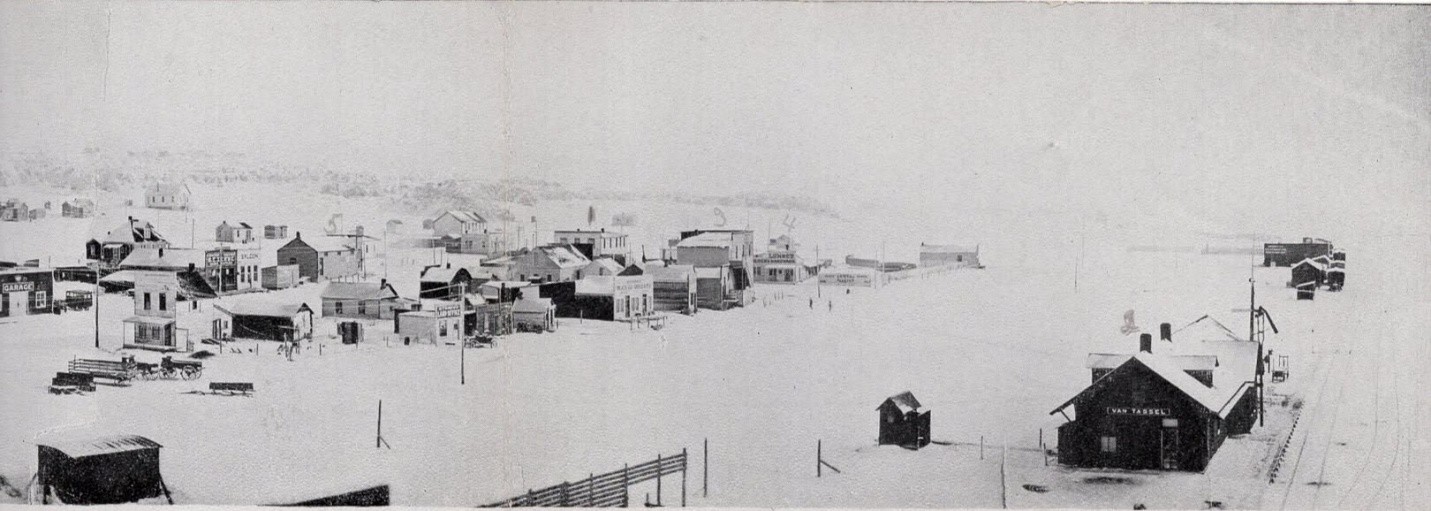
The establishment of a siding and telegraph station at Van Tassell was a strategic necessity. For the cattle barons, it meant a direct line to the stockyards of Chicago and Omaha. For the territory, it meant the end of isolation. The depot quickly became the town’s primary vital organ. Historic records from Wyoming Tales and Trails and the Niobrara County Library describe a bustling scene where steam engines hissed against the cold morning air, unloading coal, lumber, and dry goods while loading out the "grass-fat" steers that were the lifeblood of the local economy.
The railroad did more than move freight; it moved people. It brought the telegraph, which connected Van Tassell to global markets, and it brought the first wave of settlers who saw the open prairie not just as grazing land, but as a future home.
The Great Plow-Up: A Wheat Empire on the High Plains
While the late 1800s belonged to the cattlemen, the early 1900s saw a dramatic shift in the landscape. The passage of the Enlarged Homestead Act of 1909 increased the standard claim to 320 acres, enticing a new generation of "dryland" farmers to the region.
During this era, Van Tassell transformed from a mere shipping siding into a sophisticated prairie town. The town was officially incorporated in 1916, a year that marked the height of local optimism. The local economy diversified as the plow broke the sod. Historic photographs from the early 20th century, preserved in the Niobrara County Library’s historical collections, reveal a startling sight: massive wheat harvests where the horizon is dominated by horse-drawn combines and towering stacks of grain.
The winter wheat grown in the Van Tassell area gained a reputation for its high protein content and quality. The town’s business district expanded to include a bank, a hotel, several general stores, and a lumber yard. For the families living in sod houses or early frame homes across the surrounding hills, Van Tassell was the center of the universe. It was where they sold their crops, bought their Christmas oranges, and gathered for community dances.
Education and Community Spirit
As the population grew, so did the infrastructure for the next generation. The schools in and around Van Tassell were more than just buildings for instruction; they were the social anchors of the community. In a landscape where neighbors might live several miles apart, the schoolhouse and the town’s wooden storefronts provided the "social glue" that helped pioneers endure the isolation of the high plains.
Local newspaper archives from the Lusk Herald and other regional papers of the time depict a community deeply invested in its own success. There were accounts of church socials, political meetings, and the arrival of "excursion trains" that brought visitors to see the agricultural wonders of Niobrara County. The persistence of these early residents is a hallmark of the Van Tassell story—a refusal to be intimidated by the unpredictable Wyoming climate.
The Dust and the Departure
The prosperity of the 1910s and 20s was eventually met by the harsh realities of the 1930s. The combination of the Great Depression and the catastrophic drought of the Dust Bowl years hit the dryland farmers of eastern Wyoming with particular severity.
As the rains ceased and the winds began to strip the topsoil from the over-plowed fields, many families were forced to abandon their claims. The "Golden Age" of the small-scale wheat farmer began to fade, replaced by a return to larger-scale ranching operations that were better suited to the arid climate.
The Chicago & North Western railroad eventually reduced its services as the advent of the automobile and the improvement of state highways changed the way people and goods moved across the West. The depot, once a hive of activity, eventually closed, marking the end of the era that had birthed the town.
A Unique Modern Distinction
Despite the exodus of the mid-20th century, Van Tassell refused to become a memory. While other towns in similar positions disincorporated and faded from the map, Van Tassell maintained its status.
According to the most recent census data, the town remains the least populous incorporated place in Wyoming. In any other state, a population frequently cited in the double digits might suggest a community in decline. In Wyoming, however, it is viewed as a badge of honor—a testament to the "frontier persistence" mentioned in the community’s own historical narratives.
To maintain an incorporated status requires a dedicated citizenry. It requires residents to serve on town councils, manage local affairs, and preserve the identity of the community against the encroaching silence of the plains. The people of Van Tassell today are the stewards of a legacy that began with Van Tassell’s "V-V" cattle and continued through the booming wheat harvests of the 1910s.
The Landscape as a Living Document
Today, a visitor to Van Tassell can still see the echoes of its former glory. The layout of the townsite, the proximity to the railroad line, and the surrounding agricultural lands serve as a physical map of Wyoming’s development. The historic business district, while smaller now, stands as a reminder of the entrepreneurs who once gambled their futures on this patch of prairie.
The Niobrara County Library’s historical collections remain the primary repository for this history. Their images of the railroad depot and the early townsite are not merely nostalgic relics; they are essential documents that explain how Wyoming was settled. They show a community built not by accident, but through the deliberate intersection of transportation, industry, and human will.
Conclusion: Why the Story Matters
As the Wyoming Historical Society continues its mission to preserve the diverse stories of our state, towns like Van Tassell hold a special place of importance. They remind us that the history of Wyoming is not just found in our largest cities or our most famous national parks. It is found in the quiet persistence of the small, incorporated towns that refuse to be forgotten.
Van Tassell represents the full arc of the Wyoming experience: the era of the cattle kings, the arrival of the life-giving railroad, the optimism of the homesteading boom, and the quiet, enduring resilience of those who remain.
If there is a lesson to be learned from Van Tassell, it is that a community’s value is not measured by its population count, but by the depth of its roots and the strength of its story. As long as the wind blows across the Niobrara plains and Highway 20 carries travelers through the heart of the West, the story of Van Tassell will remain a vital chapter in the history of the Equality State.
Historical data is sourced from Wyoming Tales and Trails, the Wyoming State Archives, and the Niobrara County Library. The photo is from the Robert P Brown Collection.